We find what others overlook
Six specialized scanning servers, up to 21 parallel image-analysis processes and several detection layers search automatically around the clock for traces of your productions. The final decision on a notice is always human.
- 6active scan servers
- 24/7source monitoring
- up to 21parallel image analyses
- Teamfinal review
Protection works in the background
While you create, our systems monitor prioritized sources, compare visual patterns and prepare suspicious findings for human review.
-
6Scanning serversmonitor prioritized sources
-
up to 21Image-analysis processescompare visual material in parallel
-
OCRWatermarks & textassociate visible identifiers
-
TeamFinal reviewdecides every case
An anonymized system view – customer names, domains and specific finding locations remain protected.
Protection starts at release
New productions are especially vulnerable just after publication. Release Shield connects official publishing sources to the existing protection chain and gives new content higher priority during this critical window.
How fresh releases are prioritized early →
- The official source starts protectionA listing page, feed or connected source signals a new production to the protection system.
- Higher priority for new releasesNew releases are searched more frequently without displacing the ongoing monitoring of older content.
- One accountable processFindings pass through the same review, provider notice, Google layer and follow-up checks as existing cases.
-
01
Recognize publicationThe official customer source provides title, timing and reference material.
-
02
Prioritize the new productionSearch variants and visual characteristics enter the existing crawler pipeline.
-
03
Review and report findingsAfter human approval, the documented case goes to the responsible party.
-
04
Measure response timesDetection, first finding, notice and offline confirmation become traceable.
Release Shield is in controlled rollout. Intervals and available source connections are agreed for each pilot project.
Six layers instead of a simple search
A new filename is not enough to hide a copy from us. Our systems connect its location, visual content, visible identifiers, page structure and actual link target.
No single signal decides a case: crawlers find the trace, SSCD recognizes the visual, OCR reads visible clues, specialist processes reveal link targets – and a person verifies the result.
Technical background: SSCD for altered images, OCR, logos and watermarks andFaces as an additional search signal.
-

Crawlers search where leaks emerge
Six scanning servers monitor known risk areas and newly emerging sources. They focus on places where protected productions are actually shared, mirrored or republished.
-

AI finds images despite alterations
Twenty-one parallel analysis processes compare visual SSCD characteristics. The AI model recognizes content after cropping, scaling, recompression or subtle modification.
-

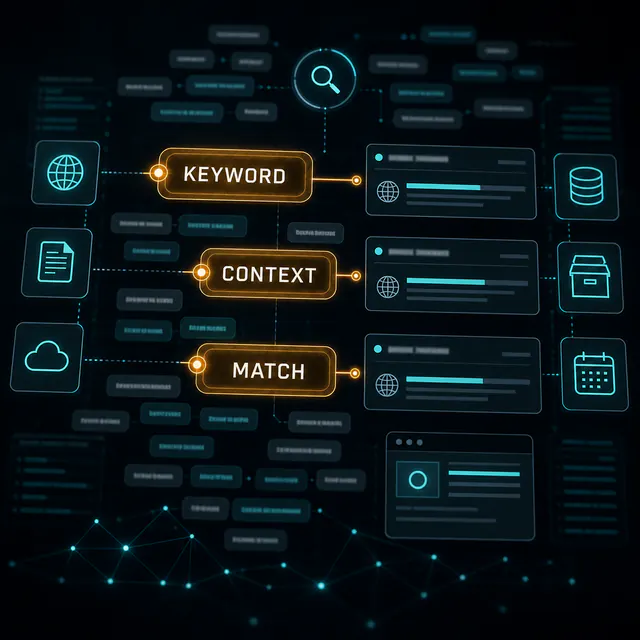
Match watermarks, logos & text
OCR detects text, watermarks, logos and recurring design elements. This helps associate findings more quickly with the correct protected content or customer profile.
-

Classify leak structures automatically
Technical and AI-assisted models recognize galleries, image series, video tiles and common leak structures. Suspicious patterns move into review with priority.
-
Reveal concealed target links
Specialized browser processes follow redirects, click paths and image- or form-based access steps. Analyzed barriers and actually recovered target links are documented separately.
-

People verify before every notice
Automation delivers speed. Our staff checks attribution and context, prevents unnecessary notices and approves only cases that can be documented clearly.
From a match to an outcome
Technology finds the trace. People review the connection. The system documents, reports and continues checking.
-
Monitor
Detect new traces
Crawlers check prioritized sources and capture new posts, galleries, archives and references.
Outcome: new trace -
Classify
Prioritize risk
Technical, visual and contextual signals are combined and assessed for relevance.
Outcome: prioritized match -
Verify
Confirm attribution
Staff reviews content, source and rights attribution. Unclear findings are not reported automatically.
Outcome: approved case -
Submit
Document the notice
Hosts, platforms or the appropriate contact points receive the required evidence and details.
Outcome: documented submission -
Follow up
Check status again
The link remains monitored until its availability is checked again and its status is updated.
Outcome: confirmed status
If reported content remains available, it returns to follow-up. When it is found offline, the system records the actual verification time.
Detect earlier, act sooner
Our process combines early detection, controlled approval and repeated verification – fast enough for the web, careful enough for defensible notices.
Start a free analysis